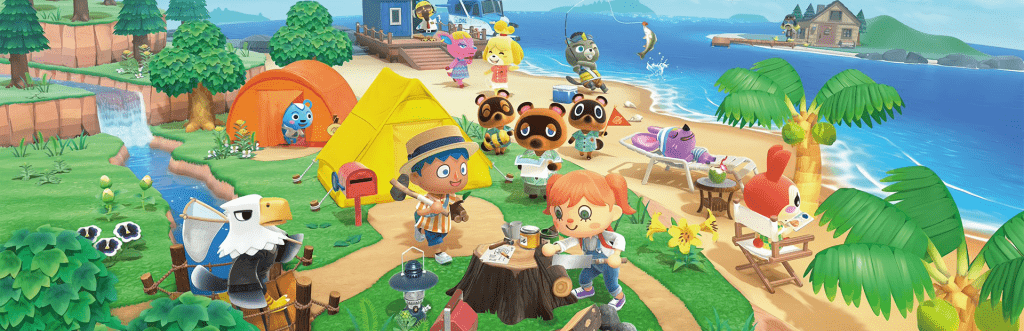
Animal Crossing: New Horizons is the social sim that became a cultural event. Released on March 20, 2020, it sold over 47 million copies worldwide and is the second best-selling Nintendo Switch game ever made and the best-selling game in Japanese retail history. It's the fifth main entry in the Animal Crossing series and the first to introduce full island terraforming alongside a crafting and customisation system expansive enough to make no two islands look alike. A Switch 2 Edition launched in January 2026 with enhanced resolution and mouse control support for decorating, available as a $4.99 upgrade for existing Switch owners. Six years on from that launch, whether the island experience still holds up is worth examining properly. The page below works through every dimension that defines the genre for this specific game, from the daily loop and the villager relationship system to the world design and how the real-time structure shapes your sessions, so you know what you're getting before you return to it or pick it up for the first time.
Play this if you want a cozy game that fills short sessions and long ones equally. The Nook Miles+ app resets daily with fresh tasks, and there’s always something productive waiting on the island when you return.
Play this if designing and personalising your space is what keeps you in cozy games. The Island Designer terraforming app and the Custom Designs QR code system give you genuine structural control over every layer of the island, from the terrain shape to the patterns on the paths.
Skip this if you’re looking for character writing or meaningful villager storylines to carry the long-term experience. The villager relationships are pleasant but surface-level, and there’s no story arc waiting behind the next friendship milestone.
Skip this if you want to sprint through the early content in a single weekend. The real-time day structure means some major features take actual calendar days to unlock, and binge-playing the early game gets frustrating before the island fully opens up.
Here's where Animal Crossing: New Horizons delivers and where it comes up short, with 4 pros and 3 cons drawn from our full metric breakdown.
Metric Gamer scores Animal Crossing: New Horizons 3.8/5 — "Animal Crossing: New Horizons is one of the defining cozy games of the last decade, and the island design and customisation systems are still as good as ever. The daily loop holds up for players who want a light check-in rather than a long session, but the story and villager relationship depth are real limits for anyone hoping for meaningful character investment. If the design and the daily rhythm appeal to you, it earns its place on the Switch."
Animal Crossing: New Horizons' daily loop resets every real-world morning and reliably fills short sessions without demanding long ones. Each day the island gives you fossils to unearth and rocks to hit for bells and materials, while the Nook Miles+ app refreshes with a new set of short-form tasks. All of it feeds into Bells or Nook Miles, and you'll spend both currencies on new infrastructure and furniture as the island build expands. The crafting system adds another layer: DIY recipes wash up in a message bottle on the beach each day, and the materials from your daily resource runs turn those recipes into furniture and tools you can place freely anywhere on the island. Early game, the pace of new recipe discoveries and infrastructure unlocks keeps each week feeling like real forward motion. Unfortunately, once the museum is filled and the main shops are open, the daily routine starts to feel more like a checklist than a game. The long-term experience depends on how much the design and decorating side keeps you engaged once the main content unlocks slow down.
Animal Crossing: New Horizons' visual style is immediately recognisable from a screenshot: the bright palette and rounded character designs have a pastel warmth that's distinctly Nintendo. The art direction holds across all four seasons, and the seasonal changes are some of the most celebrated parts of the experience. Cherry blossom petals drift across the island in spring, and winter brings snow that settles on every surface and building by December. The soundtrack matches the shift: each of the 24 hourly town tunes has four seasonal versions, so the music on a summer morning sounds different from the same hour in winter. The map is a single island with one consistent environment, and the game leans on seasonal visual changes to make that space feel different across the year. It works. The world is worth wandering even without a task directing you somewhere.
Animal Crossing: New Horizons gives you structural control over every layer of the island. The Island Designer app, unlocked as part of the late-game progression, lets you regrade the terrain and lay custom paths anywhere you want, so the physical layout of the island can be rebuilt from scratch if you choose to. House customisation extends across both the exterior and the interior: outside, you choose the roof colour and door style; inside, every room gets freely placed furniture alongside your choice of wallpaper and flooring, and you can customise what hangs from the ceiling too. The Custom Designs tool lets you create patterns from scratch or import them via QR code, then apply them to clothing and paths across the whole island. The furniture catalogue runs into the hundreds of items, and the free-placement outdoor system means the island can look like whatever you build it to be. If there's a creative ceiling on what you can do with the space, most players don't find it.
Animal Crossing: New Horizons' friendship system exists and works, but it stays largely in the background. You give villagers daily gifts and check in with them each morning, helping with item requests when they come up, and the relationship builds invisibly until a villager offers their framed photo or starts calling you by a nickname. The personality type system does most of the heavy lifting in making characters feel distinct: a Lazy villager talks about food and takes things at his own pace, while a Cranky one needs real warming up before conversations become easier. Unfortunately, villagers within the same personality type share a lot of the same dialogue, so a second Lazy or Cranky character will start to sound familiar faster than you'd expect. Deepening a bond mostly surfaces minor rewards; there isn't new story content or meaningful new dialogue waiting behind the next friendship level. What the game has in this dimension is variety at scale: with over 400 villagers to potentially invite to a 10-resident island, there's always a different community combination to build and someone new to get to know.
Animal Crossing: New Horizons doesn't have a story in any traditional sense. Tom Nook sells you a deserted island package and the goal from there is to develop the island from empty terrain into something worth visiting, with the 3-star rating needed for K.K. Slider's first concert as the clearest milestone along the way. The game's warmth comes from its named characters. Tom Nook and Isabelle are the most prominent, both warmly written with fixed personalities that make the daily interactions pleasant. Unfortunately, none of the island's regular characters have backstories that develop or arcs that resolve as the game progresses, so the personality types stay consistent from your first conversation to your thousandth. The throughline is functional: reach the next milestone and watch the space fill out. If character writing is what keeps you in cozy games, this one doesn't deliver it. The activity loop and the design tools are where the actual value lives.
Animal Crossing: New Horizons has no energy or stamina system at all. You can fish for four hours or terraform the island for two without running out of anything that limits what you do. Sessions are never cut short by a depleting resource bar. The constraint worth knowing is in the real-time structure, not the mechanics: major progression unlocks over actual calendar days, not in-game hours. Nook's Cranny upgrades after two days of sufficient shop sales, and K.K. Slider visits only after the island reaches the 3-star rating, which requires days of building to achieve. For players who want to sprint through the early content in a single session, the real-time design doesn't accommodate it. For everyone else, the structure suits the game's rhythm. Something new shows up each morning, and there's never pressure to do more than feels right for the session.
Discover more cozy games like Animal Crossing: New Horizons through our curated lists and collections that feature this title.

The Switch lives on my nightstand, which should tell you everything about how I like to game. I cover any games that help you relax, from cozy games, handheld titles, or online board games. If a game respects your time and has a story worth following, I'm in.
View Profile